
What Is Teach Your Children About

📖 Table of Contents
- What Does It Mean to Teach Your Children About the World?
- How to Make Learning About the World Fun and Engaging
- The Importance of Asking Questions
- How to Teach Your Children About the Environment
- Teaching Your Children About Other Cultures
- How to Use Technology to Teach Your Children About the World
- Teaching Your Children Through Everyday Experiences
- Make It Your Way
- Frequently Asked Questions
I remember sitting at my kitchen table, watching my 5-year-old daughter doodle on a blank piece of paper while I tried to explain why learning about the world was important. I didn't have a script or a textbook, just a vague hope that she'd pick up something valuable from the conversation. That moment, though small, was the start of my journey into teaching children about the world around them — not just the facts, but the questions that make learning real.
Teaching your children about the world isn't just about memorizing capitals or learning the names of animals. It's about planting curiosity, sparking wonder, and helping them see that the world is a place they can shape with knowledge and empathy. Over the years, I've tried many methods, from walking to the park and naming every tree to reading picture books and asking 'why' questions that kept us both engaged for hours.
What I've learned is that teaching your children about the world is less about giving them answers and more about teaching them how to ask the right questions. It's about creating a space where they feel safe to explore, to wonder, and to make mistakes. Whether it's through stories, hands-on experiments, or simple conversations, the goal is always the same: to help them see that learning is a lifelong journey — one that starts with just one question.[1]
Why You'll Love This Approach to Teaching
- Encourages lifelong curiosity and a love for learning
- Helps children understand the world in a deeper, more meaningful way
- Provides a foundation for critical thinking and empathy
- Makes learning a natural, joyful part of everyday life
What Does It Mean to Teach Your Children About the World?
As of November 2026, Teaching your children about the world is not a one-size-fits-all approach. It's about connecting them with the people, places, and things that make up their lives. Whether it's through a science experiment, a trip to the zoo, or a simple conversation about the weather, the goal is to help them see that learning is everywhere.
One of the most powerful ways to teach your children about the world is through observation. I've found that simply taking a walk around the neighborhood and pointing out different types of trees, birds, or buildings can spark a lifetime of curiosity. These moments are not just educational — they're magical.
It's also about teaching them to think critically and ask questions. When my daughter asked why the sky is blue, I didn't just give her an answer — I asked her what she thought and why. This helped her see that learning is a process, not just a list of facts.
Take a walk with your child and point out things they might not have noticed before, like the texture of bark or the way light reflects off water.
How to Make Learning About the World Fun and Engaging
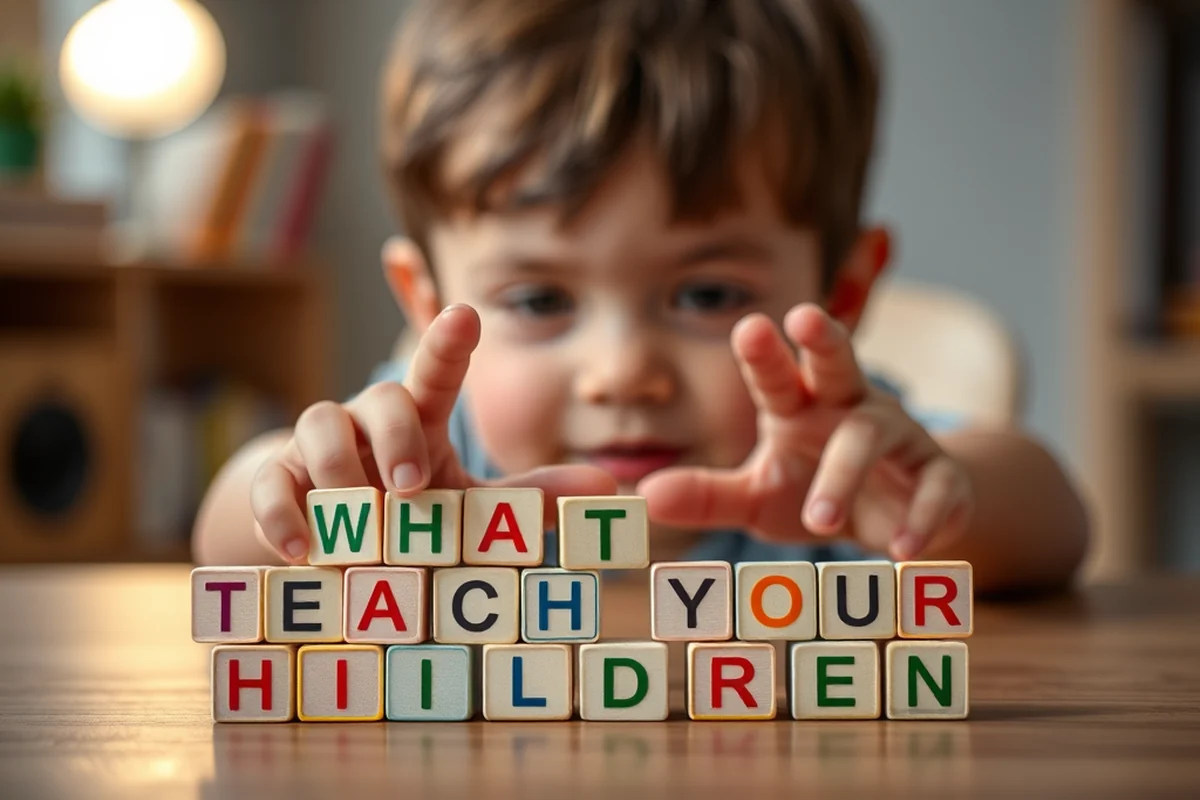
Making learning fun is key to keeping your child engaged. I've found that using stories, games, and hands-on activities helps children connect with the material in a way that textbooks never could. For example, I once used a simple board game to teach my daughter about different countries and their cultures — and she still talks about it years later.
Hands-on activities are especially effective. I remember creating a mini ecosystem in a jar with my daughter, and watching her eyes light up as she saw the tiny plants grow. These kinds of experiences help children see that learning is not just about information, but about discovery.
Stories are also a powerful tool. Whether it's a picture book or a tale from your own life, stories help children see the world through different perspectives. This not only builds empathy but also makes learning feel personal and meaningful.
When learning is fun, curiosity follows.
Related: What should i be teaching my kids
The Importance of Asking Questions
Asking questions is one of the most important skills a child can develop. I've noticed that when I encourage my daughter to ask questions, she becomes more curious, more engaged, and more willing to explore. It's like unlocking a door to a whole new world of possibilities.
Sometimes the best questions come from the unexpected. I remember my daughter asking, 'Why do clouds move?' and I was caught off guard. But instead of just giving her an answer, I asked her what she thought, and that led to a 30-minute conversation about weather and wind. That was learning at its finest.
Encouraging questions also helps children build confidence. When I tell my daughter that her questions are important, she feels more empowered to explore and learn. This not only strengthens her relationship with knowledge but also with herself.
Even the simplest question can lead to a big discovery — never dismiss a child's curiosity, no matter how small it may seem.
“I remember sitting at my kitchen table, watching my 5-year-old daughter doodle on a blank piece of paper while I tried to explain why learning…”— Teaching Drama to Kids editors
Related: Children s of alabama careers
How to Teach Your Children About the Environment
Teaching your children about the environment is one of the most important lessons you can give them. It's not just about recycling or saving water — it's about helping them understand their role in the world and the importance of taking care of it.
I've found that simple activities, like planting a garden or picking up trash in the park, are powerful ways to teach children about environmental responsibility. These activities make the concept of sustainability tangible and real to them.
It's also important to teach them about the consequences of not taking care of the planet. When my daughter asked why the river was polluted, I used that moment to explain how pollution affects animals and people. This helped her see that even small actions can have a big impact.
Related: Teach kids and learn
Teaching Your Children About Other Cultures
Teaching your children about other cultures is a powerful way to help them see the world in new and exciting ways. I've found that using books, music, and food from different countries can make learning about cultures a fun and engaging experience.
One of my favorite ways to teach my daughter about other cultures is through music. We listen to songs from different countries, and it's amazing to see her pick up new words and rhythms. This not only helps her understand different cultures but also helps her appreciate the beauty of diversity.
It's also important to teach children about the importance of respect and empathy. When we talk about different traditions and customs, I make sure to emphasize that everyone has their own way of life and that all cultures are valuable.
Related: Teacher for preschool
How to Use Technology to Teach Your Children About the World
Technology can be a powerful tool for teaching your children about the world. I've found that using educational apps, virtual tours, and online videos can help children explore different places and learn new things in a way that's both fun and engaging.
For example, I've used virtual tours to take my daughter to the Louvre in Paris or the Great Wall of China — experiences she might not have been able to have otherwise. These kinds of tools make learning about the world feel like an adventure.
It's important to use technology in moderation and to balance it with hands-on learning. I always make sure to follow up a virtual tour with a discussion or a related activity to help my daughter connect what she saw online with what she experiences in real life.
Technology is a tool, not a replacement for real-world learning.
Related: What is a daycare teacher
Teaching Your Children Through Everyday Experiences
Teaching your children about the world doesn't always have to be planned — it can happen in the most ordinary moments. I've found that simple, everyday experiences like cooking, shopping, or even walking to school can be powerful learning opportunities.
For example, when we go shopping, I use that time to teach my daughter about money, counting, and making choices. These kinds of experiences help her see that learning is not just about school — it's about life.
It's also important to be present and engaged in these moments. When you're with your child, even during the most mundane tasks, you're helping them make connections, ask questions, and explore the world in a meaningful way.
🧱 Younger Kids (Ages 3-5)
Use sensory play, picture books, and simple conversations to teach your child about the world.
📚 Older Kids (Ages 6-12)
Use science experiments, virtual tours, and group discussions to teach your child about the world.
✨ No-Prep Version
Use everyday experiences like walks, cooking, and shopping to teach your child about the world.
👥 Group Version
Use group activities like storytelling circles and collaborative projects to teach your child about the world.
🌍 Extension Activity
Use hands-on projects like creating a mini ecosystem or planting a garden to teach your child about the world.
| The mistake | Why it happens | The fix |
|---|---|---|
| Overloading your child with information | Children can become overwhelmed when too much information is given at once, which can lead to disengagement and a lack of interest. | Focus on one topic at a time and use simple, engaging methods to teach your child about the world. |
| Not allowing your child to ask questions | When children are not encouraged to ask questions, they may become passive learners who do not explore or think critically. | Make sure to listen to your child's questions and encourage them to explore their own ideas and curiosities. |
| Using only formal methods of teaching | Formal methods of teaching can make learning feel rigid and disconnected from real life, which can reduce a child's interest in learning. | Incorporate hands-on activities, play, and everyday experiences into your teaching methods to make learning more engaging and meaningful. |
| Focusing only on one aspect of the world | Focusing only on one aspect of the world, such as science or history, can limit a child's understanding and interest in learning. | Use a variety of approaches to teaching your child about the world, including nature, culture, technology, and everyday life. |
What Is Teach Your Children About
Common Questions
How can I teach my child about the world without spending a lot of money?
What are some simple ways to teach my child about different cultures?
How can I help my child ask more questions about the world?
What if my child is too young to understand complex concepts?
References
- Helping Your Child Love to Learn - Fairfax County (fairfaxcounty.gov)
Cite this guide
Teaching Drama to Kids (2026). What Is Teach Your Children About. https://dramaplayarea.com/what-is-teach-your-children-about/
Feel free to cite or share this guide.
Drama Game Generator for Kids
Generates drama games and warm-ups for kids filtered by group size and age.
Open it free →