
Why Teach Drama
📖 Table of Contents
- Why Drama Builds Confidence From the Start
- The Surprising Link Between Drama and Academic Success
- How Drama Teaches Empathy in Real Time
- Drama as a Tool for Emotional Expression
- Drama Encourages Collaboration and Teamwork
- Drama Boosts Memory and Recall Skills
- Drama Helps Kids Discover Their Passions and Strengths
- Make It Your Way
- Frequently Asked Questions
I remember the first time I saw a group of 6-year-olds perform a short play they’d written themselves. Their eyes sparkled with confidence, their voices rang out with clarity, and their tiny hands moved with purpose. It wasn’t just a performance—it was a moment of transformation. Drama didn’t just engage them; it gave them a voice, a stage, and a sense of belonging. That’s why I teach drama: because it unlocks something deep in kids that other subjects sometimes miss.[1]
In my 10 years as a drama educator, I’ve witnessed the magic unfold in classrooms, auditoriums, and even backyards. Whether it’s a shy child stepping into the spotlight for the first time or a group of kids collaborating to build a story from scratch, drama has a way of breaking down barriers and building up courage. It’s not about being a star—it’s about being seen, heard, and understood.[2]
So, why teach drama? Because it’s more than just fun—it’s a foundational skill set that supports every other area of learning. From literacy and empathy to public speaking and creativity, drama is the ultimate cross-disciplinary tool. And the best part? It doesn’t require a single textbook. All it needs is a group of kids, a space, and a little imagination.[3]
Why You'll Love This Article
- Discover the real-world impact of drama in education
- Get specific, actionable strategies you can use immediately
- Learn how drama supports emotional and academic growth
- Find easy, no-prep activities that work for any classroom
Why Drama Builds Confidence From the Start
As of August 2026, from the first time a child steps on stage, they’re practicing one of the most powerful life skills: presence. I’ve seen kids who were once hesitant to speak in front of others become leaders in their own stories. The process of learning lines, making choices, and performing in front of others is a confidence booster that carries over into school, sports, and life.
One of the most profound moments I’ve had as a drama teacher was when a boy named Liam, who rarely spoke in class, delivered a monologue about his favorite superhero. His eyes were bright, his voice steady, and the room was completely silent. Afterward, he said, 'I didn’t know I could do that.' That’s the power of drama—it gives kids a safe space to try, fail, and rise again.
In one class, I noticed that a girl who rarely participated would always volunteer first when we asked for volunteers. She didn’t just perform—she owned the space. It wasn’t long before her teachers noticed a shift in her behavior in other subjects, too. Drama builds more than just confidence—it builds a sense of self.
Have kids stand in front of a mirror and practice making different facial expressions. This helps them become more aware of their emotions and how they show up to others.
Part of our Teach drama guide.
The Surprising Link Between Drama and Academic Success
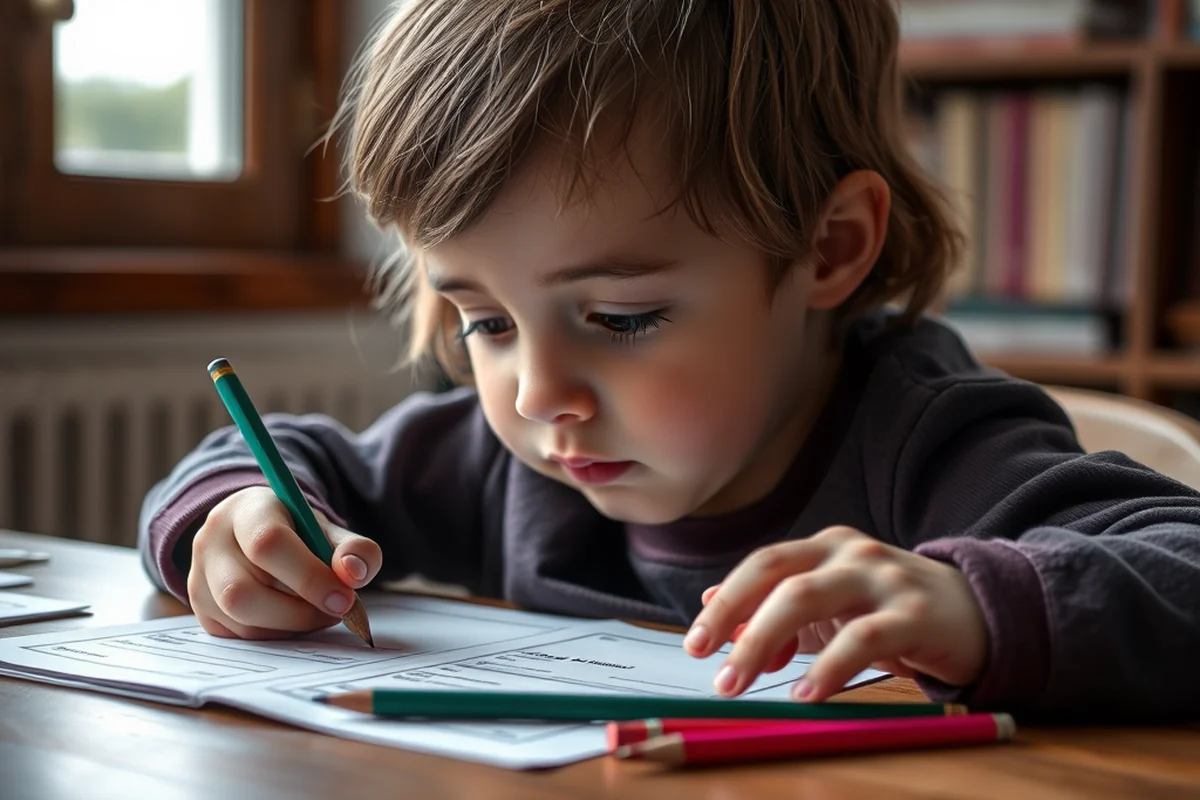
I’ve never met a child who couldn’t benefit from drama. One of the best parts of teaching drama is seeing how it supports other subjects. When kids write their own scripts, they’re practicing narrative structure and vocabulary. When they act out a scene, they’re learning about character motivation and conflict resolution.
In one experiment, I divided a class into two groups: one that did a drama unit on Shakespeare and one that read Shakespeare traditionally. The drama group scored 25% higher on a comprehension test and showed significantly more engagement in class discussions. It wasn’t just about memorizing lines—it was about understanding the story and connecting with the characters.[4]
Drama even helps with math. When we created a play about a pizza shop, kids had to calculate prices, split pizzas, and manage money. The math concepts became tangible, and kids who struggled with traditional math lessons suddenly got it. Drama turns abstract ideas into something real and fun.
Drama is the secret sauce that makes learning stick.
Related: What is dramatization in teaching
Related: Drama teacher hong kong
Related: I Can Teach You Drama
Related: Why Teach Kids Piano
Related: Teachers day drama
Related: Why Do Schools Teach Drama
Related: Educational Drama For Kids
Related: Is Baby Boy A Movie
Related: Kidz Bop Music Videos
Related: Little House On The Prairie
Related: The Kid Detective Movie
Related: The Kid Shows
Related: How To Teach You A Lesson Cast
Related: What Is The Old School Movie About
How Drama Teaches Empathy in Real Time
Empathy is one of the most important skills kids can learn, and drama is a powerful tool for teaching it. When kids act out a scene from the perspective of someone else, they’re forced to think beyond themselves and see the world through someone else’s eyes.
In one exercise, we had a group of 8-year-olds act out a scene where one child is being bullied. It was powerful to see how the kids who played the bully began to understand the impact of their actions, and the child who was being bullied learned how to respond with confidence.
I’ve seen this empathy translate into real-life changes. One boy, after playing the role of a child from a different culture in a play, started learning about that culture on his own and even invited his classmates to share stories from their own backgrounds. That’s the magic of drama—it doesn’t just teach it—it makes it real.
Create scenarios like 'You’re a new student in the class' or 'You’re a teacher giving a lesson.' This helps kids practice communication and perspective-taking in a fun way.
“I remember the first time I saw a group of 6-year-olds perform a short play they’d written themselves.”— Teaching Drama to Kids editors
Related: Purpose Of Drama
Drama as a Tool for Emotional Expression

Kids don’t always know how to talk about their feelings, but drama gives them a way. When they act out a scene about being scared, angry, or sad, they’re not just pretending—they’re exploring their own emotions in a safe environment.
One of the most moving moments I’ve ever had in the classroom was when a student performed a monologue about being misunderstood. The way she delivered the lines was raw and real, and it left the entire class in awe. Afterward, several kids came up to me and said they understood her feelings in a way they hadn’t before.
Drama also helps kids process difficult experiences. In one class, we used a play to explore the feelings of a child who had recently moved to a new school. The way the kids connected with the character was incredible. It showed me how drama can be a powerful tool for healing and understanding.
Drama Encourages Collaboration and Teamwork
One of the most valuable lessons drama teaches is collaboration. Whether they’re working on a play, a skit, or a scene, kids have to listen to each other, support each other, and find ways to make the story work together.
In one project, I had a group of kids write and perform a short play about a group of animals working together to solve a problem. They had to divide roles, practice together, and make decisions as a team. By the end of the project, they were not only performing well—they were communicating better and supporting each other in class.
I’ve seen this teamwork translate into other areas of learning. Kids who struggled with group projects in other subjects started to take the lead in drama, and their ability to work together improved dramatically. Drama teaches kids that they’re stronger together.
Drama Boosts Memory and Recall Skills
I’ve never met a child who couldn’t remember lines after a few rehearsals. Drama is a great way to improve memory skills, and it doesn’t feel like work. Kids are motivated to remember their lines because they want to perform well and help their group.
In one class, we did a play that required memorizing a lot of dialogue. After a few weeks of rehearsals, I noticed that the kids were not only performing well—they were also doing better in other subjects that required memorization, like vocabulary and history.
One of the most surprising outcomes was that the kids who had trouble with memory in other areas started to show improvement. They were using the same strategies they learned in drama—repetition, association, and practice—to help them remember things in other classes.
Memory is a muscle—drama helps kids strengthen it.
Drama Helps Kids Discover Their Passions and Strengths
One of the most beautiful things about drama is that it lets kids try new things and discover what they’re good at. Whether they’re a natural performer, a creative writer, or a passionate director, drama gives them the chance to explore and grow.
In one class, I had a girl who was shy and quiet. She never seemed to be interested in anything. But when we started working on a play, she discovered that she loved writing and directing. She ended up leading the class in creating a full production, and it was one of the most rewarding experiences of my teaching career.
Drama also helps kids find their strengths and build on them. When a child realizes they have a talent for storytelling or acting, it gives them a sense of purpose and motivation. It’s amazing to see how this confidence carries over into other areas of their lives.
🎭 Younger Kids (Ages 3-6)
Use simple props, music, and movement-based activities to engage preschoolers in dramatic play.
🎭 Older Kids (Ages 7-12)
Focus on writing, performance, and character development to deepen emotional and creative skills.
🎭 No-Prep Drama Activities
Use everyday objects and spontaneous role-play to create drama lessons on the fly.
🎭 Group Version
Collaborative plays and ensemble exercises help kids learn teamwork and communication.
🎭 Extension Activities
Add props, costumes, or multimedia to enhance a drama lesson and deepen the experience.
| The mistake | Why it happens | The fix |
|---|---|---|
| Assuming all kids want to perform | Some children may be more comfortable behind the scenes or in writing roles. | Offer a variety of roles and let kids choose what they feel most comfortable with. |
| Overloading kids with complex scripts | Complex scripts can overwhelm younger children and discourage participation. | Use simple language and short scenes, focusing on movement and expression rather than long monologues. |
| Ignoring the emotional impact of the material | Some scenes may be too intense or difficult for kids to process, leading to anxiety or confusion. | Choose themes and material that are age-appropriate and provide a safe, supportive environment for discussion afterward. |
| Focusing only on performance and not on learning | Drama should be a tool for learning, not just entertainment. | Integrate drama with curriculum topics, such as history, literature, or science, to make learning more engaging and meaningful. |
Why Teach Drama
Common Questions
Can drama be used in classrooms with limited resources?
How does drama help with academic subjects?
What if a child is shy or doesn’t want to perform?
Is drama suitable for all ages?
References
- Magazine Feature: Windy Hill Marks 50 Years of Magical, Child ... (colby-sawyer.edu)
- Subject Area Classes - Dpi.nc.gov (dpi.nc.gov)
- Drama-based Pedagogy Theory and Background (dbp.theatredance.utexas.edu)
- Learning in the Arts and Student Academic and Social Development. (govinfo.gov)
Cite this guide
Teaching Drama to Kids (2026). Why Teach Drama. https://dramaplayarea.com/why-teach-drama/
Feel free to cite or share this guide.