
What Is The Game Kids About

📖 Table of Contents
I first stumbled upon The Game Kids About during a chaotic playdate at my sister's house, where a group of children between the ages of 5 and 8 were engaged in a spirited, yet surprisingly structured, activity that combined storytelling, role-play. Problem-solving. What struck me was not just the level of engagement, but the way the game seemed to subtly teach them about empathy, creativity, and collaboration—all without a single worksheet in sight. The Game Kids About is more than just a game; it's an immersive, interactive learning experience that has quickly become a favorite in early childhood education settings and homes alike.[1]
As an educator with over a decade of experience in early learning, I've seen countless games come and go. The Game Kids About stands out for its ability to blend fun and learning seamlessly. Unlike traditional educational games that can sometimes feel forced or disconnected from a child's natural curiosity, The Game Kids About taps into the innate human desire to explore, create, and connect. It's a game that encourages children to think critically, express themselves, and work together—all while having a great time.[2]
What makes The Game Kids About particularly fascinating is its adaptability. Whether you're a parent looking for a way to entertain your children during a rainy afternoon or a teacher seeking an innovative tool to enhance your classroom activities, this game has something to offer. It's not just about the mechanics of the game, but about the experience it creates, the skills it fosters, and the joy it brings to young learners.[3]
Why You'll Love This Educational Tool
- Encourages critical thinking and creativity through immersive role-play.
- Promotes teamwork and communication in a fun, engaging environment.
- Supports social-emotional learning and empathy development.
- Adaptable for different age groups and learning objectives.
What Is The Game Kids About?
As of September 2026, at its core, The Game Kids About is a storytelling and role-playing activity where children take on different roles in a created world. The game is led by a facilitator—whether a parent, teacher, or even a child—who guides the group through a series of scenarios and challenges. Each participant has a unique role to play, and together, they must work as a team to solve problems, overcome obstacles, and achieve a shared goal.[4]
What makes this game particularly effective is its emphasis on narrative and imagination. Unlike traditional board games, which often rely on chance and competition, The Game Kids About is designed to be collaborative and inclusive. It allows children to express themselves, think critically, and develop empathy through their interactions with others.
I've used this game in my classroom, and the results have been nothing short of remarkable. Children who were initially shy or hesitant to participate have found their voices and become active contributors. The game has also helped strengthen social bonds among students and fostered a sense of belonging and mutual respect.
Begin with a straightforward scenario, such as helping a lost animal find its way home. This allows children to engage quickly and feel a sense of accomplishment from the start.
How The Game Fosters Critical Thinking
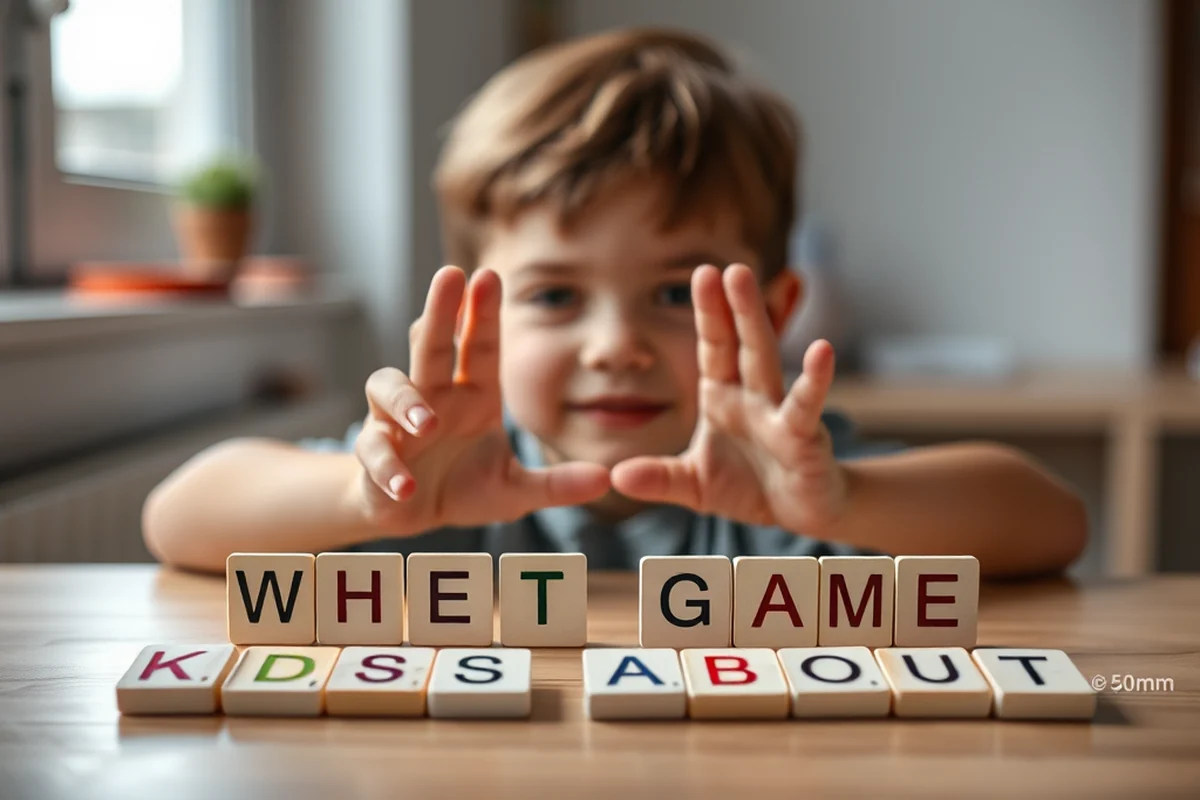
One of the most valuable aspects of The Game Kids About is the way it challenges children to think beyond the obvious. For example, in a scenario where a group of characters must escape a storm, children must consider different strategies, such as building shelter, finding resources, or working together to move to safety.
This type of thinking is not only essential for academic success but also for real-life situations. By engaging in these scenarios, children learn to analyze problems, evaluate options, and make informed decisions—all while having fun.
I've noticed that children who regularly participate in The Game Kids About show improved problem-solving skills in other areas of learning, such as mathematics and language arts. They are more confident in their abilities and more willing to take risks in their thinking.
The Game Kids About turns abstract concepts into tangible experiences.
Related: What is teaching children
Promoting Social-Emotional Learning
One of the most powerful aspects of The Game Kids About is the way it helps children understand and express their emotions. In scenarios that involve conflict or difficult decisions, children are encouraged to reflect on their feelings and consider the perspectives of others.
This practice is crucial for developing emotional intelligence, which is increasingly recognized as a key component of success in both academic and personal life. By learning to manage their emotions and communicate effectively, children are better equipped to navigate complex social situations.
I've seen children who struggle with emotional regulation become more self-aware and more compassionate toward their peers through participation in The Game Kids About. It's a game that not only entertains but also nurtures the whole child.
Ask children to imagine how their character would feel in a given situation. This helps them develop empathy and understand the emotions of others.
“I first stumbled upon The Game Kids About during a chaotic playdate at my sister's house, where a group of children between the ages of…”— Teaching Drama to Kids editors
Related: Teacher play for kids
The Role of the Facilitator
The success of The Game Kids About often depends on the facilitator's ability to create a safe, inclusive environment where all children feel comfortable participating. The facilitator must be attentive to the needs of each child and ready to adapt the game as needed.
One of the key responsibilities of the facilitator is to encourage participation from all children. This can be achieved by assigning roles that match each child's strengths and interests, as well as by providing gentle prompts to help shy or hesitant children feel more confident.
I've found that a well-trained facilitator can make a significant difference in the effectiveness of the game. When children feel supported and valued, they are more likely to take risks, express their ideas, and learn from their experiences.
Related: Kids teacher near me
The Benefits for Young Learners
For young children, The Game Kids About is a powerful tool for language development. As they engage in storytelling and role-playing, they are constantly practicing vocabulary, grammar, and sentence structure. This type of verbal expression is essential for building literacy skills and confidence in communication.
In addition to language development, the game also supports cognitive skills such as memory, attention, and logical reasoning. Children must remember their roles, follow the story, and make decisions that affect the outcome of the game.
The social benefits are equally important. Through collaboration and interaction with others, children learn to listen, share, and work as a team. These skills are essential for success in school and in life.
Related: Teaching kids about winter solstice
Adapting The Game for Different Ages
For younger children, the game can be simplified with shorter scenarios, clearer roles, and more guidance from the facilitator. This helps ensure that all children can participate and feel successful.
For older children, the game can be more complex, involving multi-step challenges, deeper problem-solving, and more abstract thinking. This allows children to explore more advanced concepts and develop higher-order thinking skills.
I've found that adapting the game to different age groups not only makes it more engaging but also ensures that children are learning at an appropriate level. When the game is tailored to their developmental stage, children are more likely to stay focused and enjoy the experience.
The Game Kids About is a flexible tool that grows with the child.
Related: Children s of alabama
The Lasting Impact of The Game
One of the most remarkable aspects of The Game Kids About is its long-term impact on children's learning and development. The skills they acquire through the game—such as critical thinking, communication, and collaboration—are not only valuable in the classroom but also in real-life situations.
Children who regularly participate in The Game Kids About often show increased confidence, creativity, and problem-solving abilities. These skills are essential for success in school, in the workplace, and in personal relationships.
As an educator, I've seen the positive effects of this game firsthand. It's not just about the immediate fun of the game; it's about the lasting benefits that children carry with them long after the game is over.
👶 Younger Kids Version
Simplified scenarios and shorter play sessions to suit the attention span and developmental stage of younger children.
🎓 Older Kids Version
More complex scenarios and abstract thinking challenges that align with the cognitive abilities of older children.
📄 No-Prep Version
A quick, no-preparation version of the game that can be played with minimal materials and setup time.
👥 Group Version
A version designed for large groups, with multiple facilitators and roles to ensure all children are engaged.
🚀 Extension Version
An advanced version of the game that includes additional challenges and deeper learning objectives for more experienced players.
| The mistake | Why it happens | The fix |
|---|---|---|
| Not providing enough guidance for younger children. | Younger children may become overwhelmed or confused if the facilitator does not provide sufficient support and direction. | Offer clear instructions, use simple language, and provide gentle prompts to help younger children stay engaged and understand their roles. |
| Ignoring the needs of shy or hesitant children. | Shy or hesitant children may not participate fully if the facilitator does not make an effort to include them in the game. | Assign roles that match the strengths and interests of each child, and provide encouragement and support to help them feel more confident. |
| Making the game too complex for the age group. | If the game is too complex, children may become frustrated or disengaged, which can negatively impact the learning experience. | Adapt the game to the developmental stage of the children, using simpler scenarios and shorter play sessions for younger children. |
| Failing to adapt the game for children with special needs. | Children with special needs may require modifications to the game to ensure they can participate and benefit from the experience. | Modify the game to accommodate different learning styles and abilities, ensuring that all children can participate and feel included. |
What Is The Game Kids About
Common Questions
How long does a typical game session last?
Can The Game Kids About be used in a classroom setting?
Are there any specific materials needed for the game?
Is The Game Kids About suitable for children with special needs?
References
- PSYCHIC POWERS: WHAT ARE THE ODDS? | CIA FOIA (foia.cia.gov) (cia.gov)
- The Powerful Role of Play in Early Education (cde.ca.gov)
- Fun, Play and Games: What Makes Games Engaging - Sign-in (ptacts.uspto.gov)
- Effects of Game-Based Instruction on the Results of Primary School ... (files.eric.ed.gov)
Cite this guide
Teaching Drama to Kids (2026). What Is The Game Kids About. https://dramaplayarea.com/what-is-the-game-kids-about/
Feel free to cite or share this guide.
Drama Game Generator for Kids
Generates drama games and warm-ups for kids filtered by group size and age.
Open it free →