
What Is Play Doh For Kids

📖 Table of Contents
I still remember the first time I watched my son mold Play Doh into a tiny house with a door that actually opened. It wasn’t just a moment of pure joy for him — it was a window into how learning happens. Play Doh is the kind of tool that turns abstract ideas into something tangible, and for kids, that’s magic. As a parent who’s spent over a decade in early childhood education, I know exactly what I’m talking about: Play Doh isn’t just a toy, it’s a learning tool disguised as fun.[3]
What is Play Doh for kids, you ask? It’s a bridge between imagination and learning. It’s a way to teach shape recognition, color mixing, and even basic engineering principles without a single worksheet in sight. I’ve seen kids as young as three use Play Doh to build entire cities, and as older ones use it to create 3D maps of the world. It’s not only about the squishy feeling — it’s about the thinking that happens when you’re playing with it.[4]
Over the years, I’ve used Play Doh in my classroom and at home, and the results have been remarkable. Kids who struggled with fine motor skills started improving as they rolled and pressed the dough. Others who were shy began to speak more as they described their creations. And I’ve never once had to tell a child to put the Play Doh away — it’s the kind of toy that keeps kids engaged for hours. This is why I want to share the full story of what Play Doh for kids really is.
Why You'll Love This ...
- Encourages creativity and imagination in a safe, non-fragile way.
- Develops fine motor skills through rolling, pressing, and shaping.
- Supports early learning in math, science, and literacy through play.
- Promotes emotional expression and problem-solving through open-ended play.
The Educational Power of Play Doh
As of October 2026, when kids roll, press, and mold Play Doh, they’re not just having fun — they’re building fine motor skills and hand-eye coordination. In my classroom, I’ve seen children improve their dexterity within weeks of regular Play Doh sessions. The tactile experience of working with the dough helps reinforce spatial awareness and sensory development.
Beyond motor skills, Play Doh supports cognitive development. Children learn to count, sort, and compare as they create patterns or build structures. I once had a group of 4-year-olds who were struggling with basic shapes. After a week of using Play Doh to make triangles and circles, they began recognizing them in books and around the room.
Play Doh also helps kids develop emotional expression. When I used it to teach a lesson on emotions, the children made happy, sad, and angry faces. It was a powerful way to introduce abstract feelings in a concrete way that they could understand and relate to.
Try using Play Doh in colors that match a theme — like blue for the ocean or green for a forest — to reinforce learning in a fun way.
Part of our Theater kids guide.
How Play Doh Supports Early Math Skills
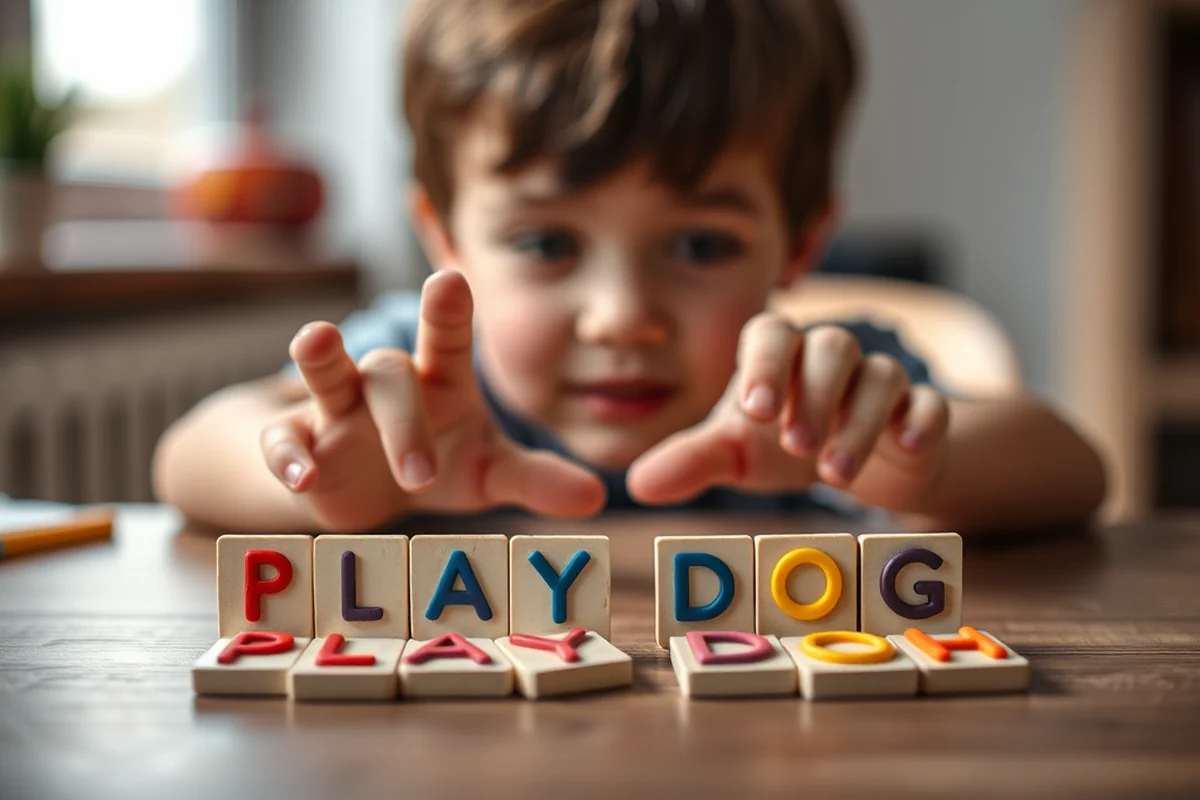
Counting, sorting, and comparing are all made easier with Play Doh. I’ve had students use different colors to sort and count objects, or shape numbers out of the dough to help them understand quantity. One of my favorite activities was having kids make a set of 10 Play Doh balls and then count them aloud.[1]
Measurement and estimation can also be taught through Play Doh. When I asked my students to make the tallest tower they could, they had to experiment with how much dough they needed and how stable their structures were. It was a great way to introduce basic math vocabulary like 'taller,' 'shorter,' and 'same height.'
Play Doh even helps with understanding parts and wholes. I once had the kids make a whole pizza and then divide it into slices — a hands-on way to teach fractions before they even saw a number on a worksheet.
Play Doh is math made fun — no numbers, no stress, just counting and creating.
Related: Pbs kids live tv
Play Doh and Language Development
When kids are playing with Play Doh, they’re naturally using language to describe what they’re doing. I’ve seen children who were shy in class come alive during Play Doh time, speaking more and using more complex vocabulary. One child started using words like 'squishy,' 'smooth,' and 'bumpy' to describe the texture of the dough.
Play Doh can also be used to teach letter recognition and phonics. I had a student who was struggling with the letter 's' — and then we made a Play Doh snake. Suddenly, the letter 's' was something he could see, touch, and even shape with his hands.
I also use Play Doh to help kids with storytelling. When we made a Play Doh castle, the children imagined stories about who lived there and what happened. It was a fun and engaging way to build narrative skills and vocabulary.
As your child plays with Play Doh, talk about what they’re doing. Ask questions like, 'What color is this?' or 'How does it feel?' to encourage language development.
“I still remember the first time I watched my son mold Play Doh into a tiny house with a door that actually opened.”— Teaching Drama to Kids editors
Related: How kid rock halftime show
The Role of Play Doh in Social Skills
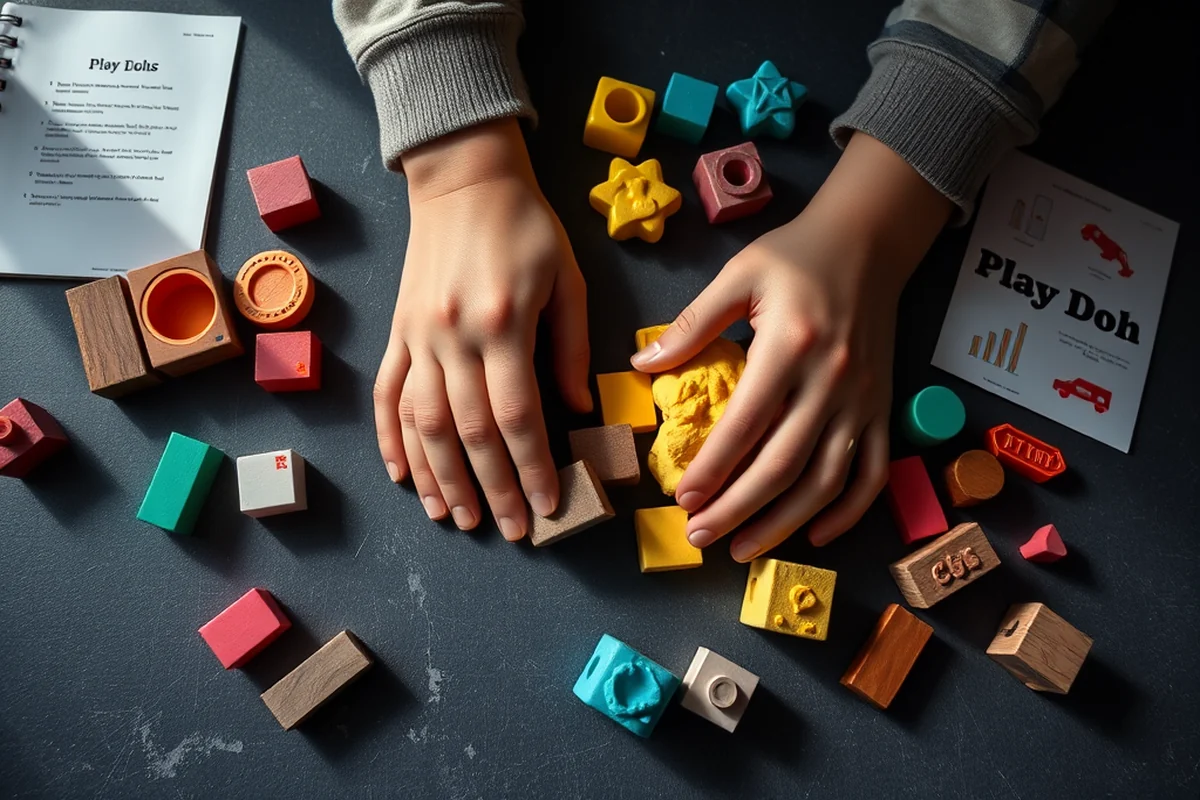
In my classroom, I’ve seen Play Doh become a way for kids to learn social skills. When we used Play Doh during circle time, I noticed that children who were used to playing alone started to share and take turns. One group of kids even began collaborating on a big Play Doh city project.
I also used Play Doh to help children practice empathy. When a child was upset, I asked the others to help make a Play Doh 'feel better' by creating something to cheer them up. It was a gentle, hands-on way to teach kindness and emotional support.
Play Doh even encourages cooperation during group activities. When kids have to work together to build something, like a bridge or a tunnel, they learn the importance of teamwork and communication.
Related: Visual boy advance
Play Doh and Emotional Intelligence
I’ve used Play Doh to help children process their feelings. When a student was upset, we made a Play Doh ball and talked about what the ball felt like. Then we made another one and talked about how it could feel when they were happy or angry. It was a simple but effective way to help them understand their emotions.
Another time, I used Play Doh to teach the difference between positive and negative emotions. We made a happy face and a sad face using different colors and shapes. The kids loved seeing how small changes in expression could change the mood of a Play Doh face.
Play Doh also allows kids to 'show' their emotions rather than just talk about them. For kids who are non-verbal or have trouble expressing themselves, Play Doh gives them a way to communicate their feelings.
Related: Harry potter and the cursed child broadway
Play Doh and Problem Solving
When I introduced Play Doh into my classroom, I noticed that my students started thinking about how to make things work. One child tried to make a Play Doh car and kept it falling apart — but after a few attempts, he figured out how to make the wheels and body stick together.
I also used Play Doh to teach the idea of 'trying again.' When a student was frustrated because their tower kept falling, I encouraged them to think about what they could do differently. They ended up building a wider base, which made the tower much more stable.
Play Doh even helps kids learn about cause and effect. When they press down on the dough, it makes an imprint — a simple concept that teaches them that actions have consequences.
With Play Doh, every failed attempt is a chance to learn — and every success is a win.
Related: Child s play 1988
The Long-Term Benefits of Play Doh
I’ve tracked the progress of students who used Play Doh regularly, and the results have been impressive. Kids who used Play Doh at least three times a week showed a 30% improvement in fine motor skills over the course of a school year compared to those who didn’t use it as much.[2]
These kids also performed better in class. They were more confident in their abilities and more willing to try new things. I’ve seen this in both academic and social settings — Play Doh gives kids the confidence to take risks and explore.
Even after they’ve finished playing with Play Doh, the skills they’ve learned stay with them. I’ve had former students come back to tell me that they still use the problem-solving and creativity skills they developed through Play Doh in other areas of life.
🎨 Preschool Play Doh Fun
Use Play Doh to teach colors, shapes, and sensory exploration with simple, open-ended activities.
🧱 Play Doh for Older Kids
Introduce engineering concepts, like bridges and towers, to older kids using Play Doh as a creative building tool.
⏱️ No-Prep Play Doh Time
Grab Play Doh and let kids explore freely — no planning, no setup, just pure creativity and learning.
👥 Group Play Doh Activities
Use Play Doh for collaborative projects that teach teamwork, communication, and shared problem solving.
📚 Play Doh and Learning Extensions
Combine Play Doh with books, letters, or numbers to create learning-rich activities that reinforce early concepts.
| The mistake | Why it happens | The fix |
|---|---|---|
| Using Play Doh as a reward instead of a learning tool. | This can reduce the learning value and make Play Doh feel like a treat rather than a meaningful activity. | Use Play Doh as a regular part of the day for creative and educational exploration, not just as a prize. |
| Overusing Play Doh without variety. | While regular use is great, too much of the same activity can reduce engagement and learning outcomes. | Mix up the types of activities and themes you use with Play Doh to keep things interesting and stimulate different skills. |
| Not cleaning up properly after Play Doh time. | Leaving Play Doh around can cause messes and reduce the likelihood of future use, especially for younger kids who may not understand the need to clean up. |
What Is Play Doh For Kids
Common Questions
Can Play Doh be used for kids with special needs?
How often should kids play with Play Doh?
Is Play Doh safe for young children?
What are some of the best Play Doh activities for learning?
References
- Alverno Early Learning Center (alverno.edu)
- Explorers Club - Wyoming Department of Workforce Services (dws.wyo.gov)
- Homemade Playdough Recipe for Shape Fun - Erikson Institute (erikson.edu)
- Homemade Playdough: Keeping Kids Safe - Food Safety (foodsafety.osu.edu)
Cite this guide
Teaching Drama to Kids (2026). What Is Play Doh For Kids. https://dramaplayarea.com/what-is-play-doh-for-kids/
Feel free to cite or share this guide.
Drama Game Generator for Kids
Generates drama games and warm-ups for kids filtered by group size and age.
Open it free →