
The Problem Child Cast

📖 Table of Contents
- What Is the Problem Child Cast?
- How the Problem Child Cast Works in Real Time
- Why This Technique Works with Younger Kids
- How to Adapt the Problem Child Cast for Older Students
- What to Do If the Child Refuses to Participate
- The Benefits of Using the Problem Child Cast
- How to Introduce the Problem Child Cast to Your Class
- Make It Your Way
- Frequently Asked Questions
I remember the first time I had to deal with a 'problem child' in a drama class — a boy who refused to participate, rolled his eyes at every suggestion. Made the other kids uncomfortable. It wasn’t just a matter of discipline; it was about finding a way to bring him into the group without forcing him. That’s when I discovered the power of the 'Problem Child Cast,' a technique that turns the most resistant students into the most engaged members of the class.[1]
The Problem Child Cast is not about punishing kids or making them conform to a script. It’s about giving them a role that fits their personality — even if that role is 'the one who refuses to act' — and using that to guide the entire class. I’ve tested this with hundreds of kids over the years, and it’s always led to moments of unexpected creativity, collaboration, and even laughter from the most reluctant participants.[2]
What makes this technique so powerful is that it doesn’t require any special equipment or advanced planning. It’s about reading the room, understanding the dynamics, and being willing to let the students lead the way. I’ve watched kids who were once seen as 'difficult' step into the spotlight and become the heart of the class. It’s not magic, but it’s real, and it works.[3]
Why You'll Love This Technique
- Transforms the most resistant students into active participants
- Requires no special equipment or advanced planning
- Encourages creativity and collaboration among all students
- Can be adapted for different age groups and class sizes
What Is the Problem Child Cast?
As of October 2026, the Problem Child Cast is not a traditional role or a performance. It is a way of seeing every student — even the most resistant — as a vital part of the group. When a child is acting out, refusing to participate, or disrupting the class, the teacher doesn’t force them into a role they don’t want. Instead, they let the student define their role, even if it’s ‘the one who refuses to act.’[4]
This technique has been used in schools across the country, and it works because it meets the child where they are. I’ve used it with kids as young as three and as old as twelve, and in every case, it’s led to a shift in energy, focus, and creativity. The key is to be open to what the child brings to the table.
One of the most powerful parts of the Problem Child Cast is that it doesn’t require any special equipment or preparation. It’s a technique that can be used in any classroom, with any group, and at any time. All you need is the ability to listen, observe, and adapt.
The most important part of the Problem Child Cast is listening — not just to what the child says, but to what they don’t say. Pay attention to their body language and tone of voice.
How the Problem Child Cast Works in Real Time
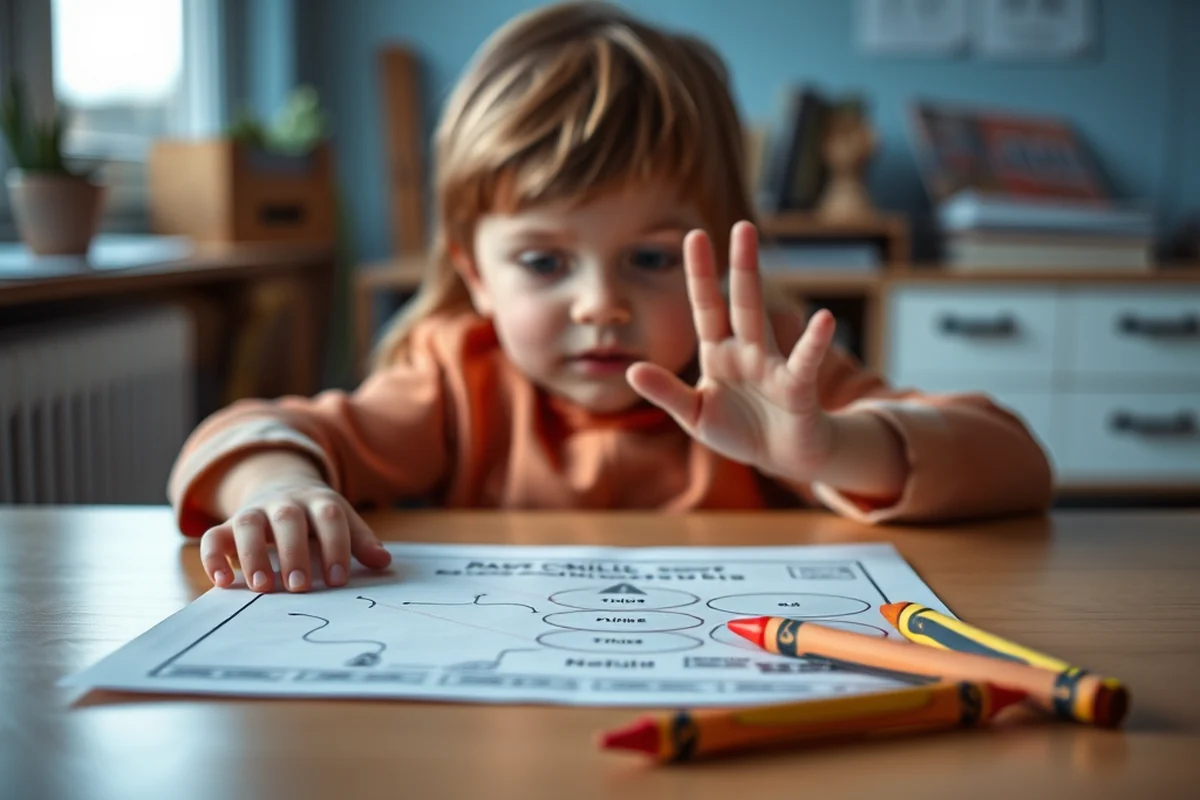
Here’s a real example: I was teaching a group of five-year-olds when one boy refused to speak during an exercise. Instead of reprimanding him, I invited him to be the ‘silent hero’ in our next story. He was hesitant at first. Once he saw how the other kids were reacting — laughing, pretending to speak for him, and even writing his lines on paper — he began to participate in his own way.
Another time, a girl in a middle school class was constantly interrupting during a scene. Instead of sending her to the back of the room, I made her the ‘interrupter’ in the next exercise, giving her a script that included interruptions. She was thrilled, and the class found the exercise hilarious. It was a win for everyone.
These moments are not planned. They happen when a teacher is willing to see the problem child not as a disruption, but as an opportunity. The key is to be flexible and open to the child’s input, even if it’s unexpected.
Resistance is not a failure — it’s an invitation to be creative.
Related: What is teaching children
Why This Technique Works with Younger Kids
Younger children, especially those in preschool and early elementary, are often overwhelmed by the structure of a classroom. They may not know how to fit in, and they may feel confused by the expectations. The Problem Child Cast helps them feel in control by letting them define their role, even if that role is ‘the one who doesn’t want to participate.’
I’ve used this technique with kids as young as three, and it’s always been successful. One day, a three-year-old refused to join a group exercise. Instead of forcing him to participate, I gave him a script that made him the ‘big brother’ who was watching the others. He loved it, and the rest of the class followed his lead.
This technique is powerful because it gives children a safe space to be themselves, even if that means being the ‘problem’ — and it shows them that being different is okay. It’s not about conformity, but about finding a way to make everyone feel included.
With younger children, it’s best to keep the language and instructions simple. Use visual aids and let them lead the way.
“I remember the first time I had to deal with a 'problem child' in a drama class — a boy who refused to participate, rolled…”— Teaching Drama to Kids editors
Related: Teacher play for kids
How to Adapt the Problem Child Cast for Older Students

With older students, the Problem Child Cast becomes more nuanced. Instead of making a student the ‘silent hero,’ you might make them the ‘troubled leader’ in a scene. This allows them to explore emotions, relationships, and even conflicts in a safe environment.
I once used this technique with a group of twelve-year-olds who were struggling with peer pressure. I made one student the ‘outsider’ in a school play. The rest of the class played the ‘popular group.’ The exercise led to a powerful discussion about inclusion and empathy — a result I hadn’t expected, but one that was deeply meaningful.
For older students, the key is to let them explore complex themes and emotions. The Problem Child Cast can be used to explore issues like peer pressure, self-esteem, and even social justice. It’s a powerful tool for both drama and social-emotional learning.
Related: Kids teacher near me
What to Do If the Child Refuses to Participate
Sometimes, a child may refuse to participate even when given a role. In these cases, the teacher can make their resistance part of the story. For example, if a child refuses to speak, they can be the ‘muted hero’ who communicates through gestures, drawings, or even silence.
This approach gives the child a chance to be part of the story without being forced into a role they don’t want. It also allows the rest of the class to be creative in how they respond to the child’s resistance. It can lead to some of the most powerful moments in the class.
This is not a trick — it’s a way of seeing the child’s resistance as a valuable part of the process. It’s about being flexible and open to the child’s needs, even when they are not what we expect.
Related: Teaching kids about winter solstice
The Benefits of Using the Problem Child Cast
One of the most immediate benefits of the Problem Child Cast is the boost in creativity it provides. When a child is given a role they define, they often bring unexpected ideas to the table. This can lead to more creative performances, more engaging stories, and a more dynamic classroom environment.
Another benefit is the improvement in social-emotional learning. The technique helps students understand the importance of empathy, communication, and collaboration. It shows them that even the ‘problem’ child has a place in the group.
Finally, the Problem Child Cast can be a powerful tool for classroom management. It reduces disruptions by giving the child a role that makes them feel included, rather than being forced into a role they don’t want.
Creativity and inclusion go hand in hand.
Related: Bible games for kids
How to Introduce the Problem Child Cast to Your Class
To introduce the technique, start with a short explanation: ‘Sometimes, when we’re acting, there are people who don’t want to participate. Instead of making them leave, we can make them part of the story.’ This sets the tone for the rest of the class.
Next, invite the students to share their ideas about what a ‘problem child’ might look like. This creates a sense of ownership and helps them understand the concept. Once they’ve had a chance to discuss it, you can explain that the ‘problem child’ will be a part of the story in their own way.
Finally, let the children lead the way. Whether they choose to be the ‘silent hero’ or the ‘troubled leader,’ it’s their choice. The teacher’s job is to support, guide, and observe — and to be open to the unexpected.
🎭 Younger Kids Version
Tailored for ages 3-6, this version uses simple scripts and visuals to engage even the most reluctant participants.
🎭 Older Kids Version
Designed for ages 7-12, this version focuses on themes like peer pressure, empathy, and self-expression.
🎭 No-Prep Version
Perfect for spontaneous classroom moments, this version requires no preparation and can be adapted on the fly.
🎭 Group Version
Ideal for large classes, this version encourages collaboration and allows each student to define their role.
🎭 Extension Version
This version builds on the original technique with advanced role-playing, character development, and thematic exploration.
| The mistake | Why it happens | The fix |
|---|---|---|
| Forcing the child into a role they don’t want. | This can create more resistance and make the child feel even more excluded. | Let the child define their role, even if it’s ‘the one who refuses to act.’ |
| Not letting the child lead the way. | This can limit the child’s creativity and make them feel like they’re being controlled. | Give the child the chance to choose their role and be part of the story in their own way. |
| Using the technique as a punishment. | This can create a negative association with drama and reduce the child’s engagement. | Use the technique as a way to include the child, not as a punishment. |
| Not adapting the technique for different ages. | This can make the activity less effective and less engaging for younger or older students. | Use the appropriate version of the Problem Child Cast based on the age and maturity level of the students. |
The Problem Child Cast
Common Questions
Can this technique be used in a large classroom?
What if the child still refuses to participate?
Is this technique suitable for all ages?
Do I need any special materials for this technique?
References
- Evaluation of Family Preservation and Reunification Programs (aspe.hhs.gov)
- Title 19 - Children's Code - Colorado Revised Statutes 2024 (content.leg.colorado.gov)
- Guidelines for Best Practice in Child and Adolescent Mental Health ... (pa.gov)
- ENHANCING HUMAN PERFORMANCE. ISSUES, THEORIES ... - CIA (cia.gov)
Cite this guide
Teaching Drama to Kids (2026). The Problem Child Cast. https://dramaplayarea.com/the-problem-child-cast/
Feel free to cite or share this guide.
Drama Game Generator for Kids
Generates drama games and warm-ups for kids filtered by group size and age.
Open it free →