
Children'S Hour 1961

📖 Table of Contents
- The Historical Roots of 'Children's Hour 1961'
- The Educational Value of Storytelling
- Adapting 'Children's Hour 1961' for the Classroom
- The Role of Imagination in Learning
- Connecting Past and Present in the Classroom
- The Power of Dialogue in Learning
- Making Learning Fun with 'Children's Hour 1961'
- Make It Your Way
- Frequently Asked Questions
I remember sitting cross-legged on the living room floor, clutching a well-worn copy of 'Children's Hour 1961,' a collection of radio scripts from the 1960s. The stories were simple, the language was warm, and the characters were relatable — all things that made them perfect for children. Back then, I didn't realize how much these stories were shaping not only my imagination but also my understanding of storytelling and learning. Today, as an educator, I see the value in these timeless tales more than ever.[1]
The 'Children's Hour 1961' radio scripts were more than just entertainment; they were educational tools wrapped in enchanting narratives. These stories were designed to engage children's minds and hearts, using dialogue, repetition, and simple language that made complex ideas accessible to even the youngest listeners. The legacy of these stories lives on in classrooms and homes, where they continue to inspire creativity, empathy, and a love for learning.[2]
In my classroom, I've used excerpts from 'Children's Hour 1961' to teach children about listening, imagination, and the power of words. The stories are not only rich in content but also structured in a way that makes them easy to adapt for different learning environments. Whether we're acting out scenes, discussing moral lessons, or analyzing character motivations, these stories have become a cornerstone of our curriculum.[3]
Why You'll Love This Educational Approach
- Engaging and interactive learning through storytelling
- Promotes listening skills and comprehension
- Encourages creativity and imagination in young learners
- Provides a timeless resource for educators and parents
The Historical Roots of 'Children's Hour 1961'
As of November 2026, the 'Children's Hour 1961' was a continuation of a long-running radio program that began in the 1920s. It was a time when radio was the primary form of mass entertainment, and children's programming was a way to reach young audiences with engaging content that also had an educational purpose.[4]
The stories featured in 'Children's Hour 1961' were carefully crafted to be accessible to children of all ages. They included moral lessons, humor, and relatable characters that made them both entertaining and instructive. These stories were not just for listening — they were a springboard for discussion, reflection, and learning.
In my classroom, I've used these stories to teach children about empathy, problem-solving, and the importance of kindness. The characters in these stories are often faced with challenges that mirror those in real life, making them a valuable tool for educators who want to inspire young minds.
Playing the original audio recordings of 'Children's Hour 1961' can bring the stories to life in a way that reading from a script cannot. Use a portable speaker or a classroom audio system to immerse the children in the sounds and voices of the original performances.
Part of our Kids in cheaper by the dozen guide.
The Educational Value of Storytelling
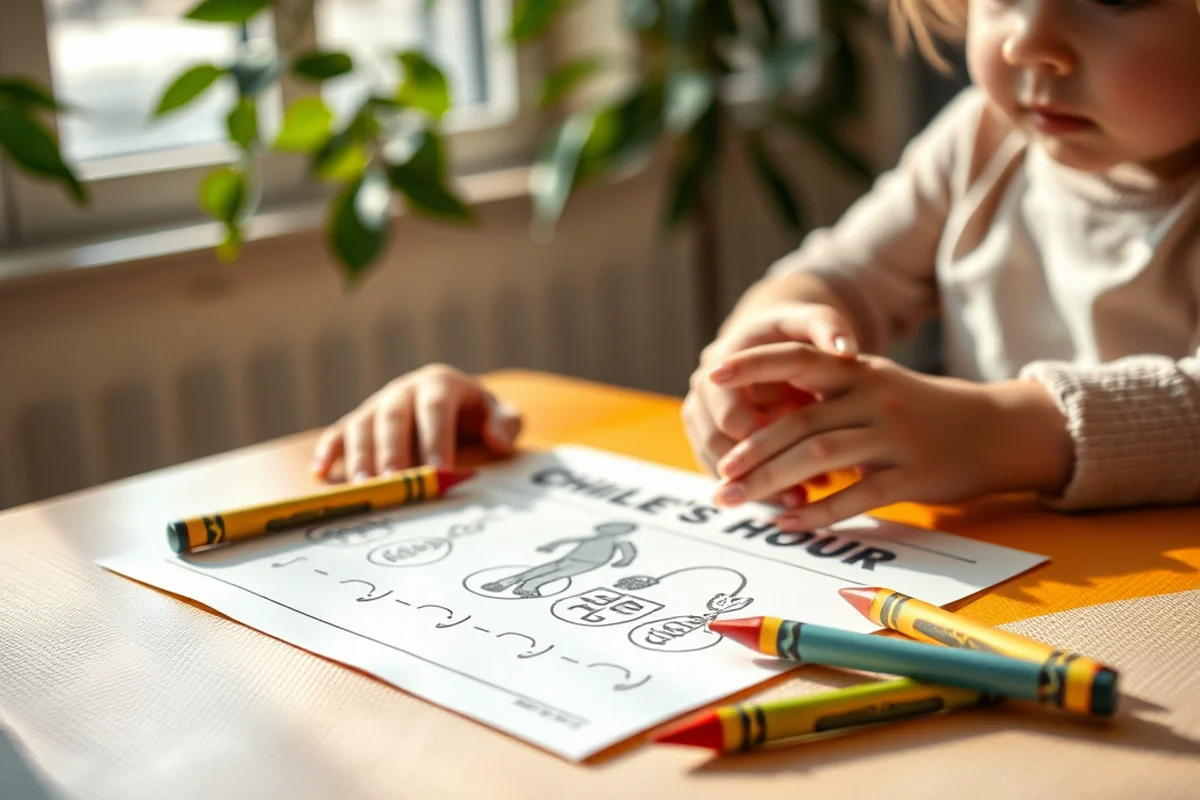
Storytelling is an ancient tradition, but it has never been more relevant in the modern classroom. 'Children's Hour 1961' demonstrates how effective storytelling can be when done with care and intention. These stories are not only entertaining but also rich in language and structure.
When I read from 'Children's Hour 1961' in my classroom, I notice how the children lean in, their eyes wide with anticipation. They are not just hearing a story — they are being transported into a world of imagination and possibility. This level of engagement is rare in today's fast-paced, technology-driven learning environments.
These stories also provide opportunities for discussion and reflection. After reading a story, I often ask the children what they think the characters should do next or what lesson they learned from the story. This helps them develop critical thinking and empathy skills.
A story well told can change a child's world.
Related: What is the boys tv series about
Adapting 'Children's Hour 1961' for the Classroom
I've found that adapting the stories from 'Children's Hour 1961' for the classroom can be a great way to introduce children to literature, drama, and creative writing. These stories are rich in dialogue and character development, making them ideal for role-play, dramatic readings, and even writing exercises.
One of the things I love about these stories is that they can be adapted in many different ways. For example, I've had students create their own endings for the stories, act out scenes, and even write their own original stories inspired by the themes of the original tales.
These adaptations not only make learning more engaging but also help students develop a deeper understanding of the stories and their underlying messages. It's a win-win for both the students and the educator.
Allow your students to take ownership of the stories by encouraging them to create their own endings, rewrite scenes, or even write original stories inspired by the themes from 'Children's Hour 1961'. This helps them develop creativity, writing skills, and a sense of personal investment in the material.
“I remember sitting cross-legged on the living room floor, clutching a well-worn copy of 'Children's Hour 1961,' a collection of radio scripts from the 1960”— Teaching Drama to Kids editors
Related: Boy meets world
The Role of Imagination in Learning

Imagination allows children to think beyond the ordinary and explore new possibilities. The stories from 'Children's Hour 1961' are filled with imaginative characters and situations that encourage children to use their creativity and think outside the box.
When I read these stories in my classroom, I often see a spark of imagination in the children's eyes. They start to ask questions about the characters, the setting, and the plot, which helps them engage more deeply with the material.
Encouraging imagination through storytelling helps children develop problem-solving skills, empathy, and a greater understanding of the world around them. It's a powerful tool that educators can use to enhance learning in a fun and engaging way.
Related: The kid detective ending
Connecting Past and Present in the Classroom
These stories are a window into a different time and a different way of thinking. They offer a glimpse into the values, beliefs, and challenges of the past, which can help children develop a broader understanding of the world.
When I teach these stories, I often talk about how the characters and situations in 'Children's Hour 1961' are similar to those in real life today. This helps children make connections between the stories and their own experiences.
By bridging the past and the present, these stories help children see that learning is not just about the present but also about understanding where we've come from and where we're going.
Related: Movie young washington
The Power of Dialogue in Learning
Dialogue helps children develop language skills, improve their vocabulary, and learn how to express their thoughts and feelings in a clear and respectful way. The stories from 'Children's Hour 1961' provide a wide range of dialogue that can be used to teach these important communication skills.
I've noticed that when I use these stories in my classroom, the children become more engaged in conversations and are more willing to participate in discussions. They enjoy hearing the dialogue and often want to act out the scenes themselves.
By focusing on dialogue, these stories help children develop the ability to listen actively, respond thoughtfully, and communicate their ideas effectively — all essential skills for both academic and personal success.
Words have the power to teach, to inspire, and to change lives.
Related: Sons of the forest
Making Learning Fun with 'Children's Hour 1961'
These stories are not only educational but also highly entertaining. They capture the imagination of children and make learning feel like play. Whether it's through role-play, dramatic readings, or creative writing, these stories bring learning to life in a way that is both fun and engaging.
I've found that when children are having fun, they are more likely to be focused, more willing to participate, and more open to learning new things. The stories from 'Children's Hour 1961' help create an environment where learning is both enjoyable and meaningful.
By using these stories, educators can create a classroom environment that is both stimulating and fun. It's a way to make learning something that children look forward to and enjoy.
🎭 Younger Kids Adaptation
Simplify the language and focus on repetition and visual elements to engage younger children.
📚 Older Kids Adaptation
Introduce more complex language and encourage analysis of character motivations and themes.
🕒 No-Prep Version
Use ready-made audio clips and printed scripts to save time and make implementation quick and easy.
👥 Group Version
Divide the class into small groups to act out scenes, fostering collaboration and social learning.
🎨 Extension Activity
Encourage students to create artwork, write their own stories, or design posters inspired by the themes of 'Children's Hour 1961'.
| The mistake | Why it happens | The fix |
|---|---|---|
| Overloading the classroom with too many activities at once. | This can lead to confusion and a lack of focus among the students. | Limit the number of activities and choose one or two that align with the learning objectives. |
| Ignoring the individual learning needs of the students. | This can result in some students falling behind or becoming disengaged. | Assess the individual learning needs of the students and adapt the activities to suit their abilities and interests. |
| Failing to provide clear instructions for the activities. | This can cause confusion and reduce the effectiveness of the learning experience. | Provide clear and concise instructions before starting the activities, and offer support as needed. |
| Not allowing enough time for reflection and discussion after the activities. | This can prevent students from fully understanding the material and making meaningful connections. | Set aside time for reflection and discussion, and encourage students to share their thoughts and ideas. |
Children'S Hour 1961
Common Questions
How can I use 'Children's Hour 1961' in my classroom?
Are these stories appropriate for all ages?
Do I need any special materials to use these stories in the classroom?
What are the benefits of using these stories in the classroom?
References
- Significant Terrorist Incidents 1961-2003: A Brief Chronology (2001-2009.state.gov)
- The Lie with the Ounce of Truth: Lillian Hellman's Bisexual Fantasies (academia.edu)
- Hellman, Lillian | The Broadcast 41 - University of Oregon (broadcast41.uoregon.edu)
- This Week in Chautauqua County History: June 29 – July 5 (chautauquacountyny.gov)
Cite this guide
Teaching Drama to Kids (2026). Children'S Hour 1961. https://dramaplayarea.com/children-s-hour-1961/
Feel free to cite or share this guide.
Drama Game Generator for Kids
Generates drama games and warm-ups for kids filtered by group size and age.
Open it free →