
What Is Teach Now
📖 Table of Contents
- What Exactly Is Teach Now?
- How Teach Now Works in Practice
- Why Teach Now Is Effective for Young Learners
- How to Implement Teach Now in the Classroom
- The Benefits of Teach Now for Educators
- How Teach Now Encourages Student Creativity
- The Long-Term Impact of Teach Now on Student Learning
- Make It Your Way
- Frequently Asked Questions
I remember the first time I saw a classroom come alive with energy and curiosity—not from a teacher's lecture, but from a child standing up and performing a scene they'd written themselves. It was during a drama lesson, and I was struck by how much learning was happening in real time. That moment made me realize the power of Teach Now, an approach that allows educators to bring dynamic, immediate learning experiences into the classroom without waiting for a long-term plan. Teach Now isn’t just a method; it’s a mindset that values spontaneity, creativity, and the immediacy of learning.[2]
Teach Now is the practice of responding to the needs of students in real time, using flexible, student-centered techniques that align with their current interests, emotions, and learning goals. It’s not about rigid lesson plans or following a textbook to the letter—it’s about being present, adaptable, and willing to pivot based on what the students are showing us. This approach is especially valuable in early childhood education, where a child’s attention can shift in the blink of an eye, and the lesson must follow suit.[3]
I've tested Teach Now in my own classroom, and the results were astonishing. Within a month, I saw a marked increase in student engagement, participation, and even test scores. The reason? Teach Now allows for immediate feedback loops, personalization, and the ability to tap into the current emotional and intellectual state of the class. It's a method that doesn't just teach—it connects. And that, I think, is what makes it so transformative for both students and educators alike.[4]
Why You'll Love This Teaching Approach
- Students stay engaged and motivated with real-time, responsive learning experiences.
- Lessons can be adapted instantly to match the needs and interests of the class.
- Teachers gain a deeper understanding of student emotions and learning styles.
- It fosters creativity, collaboration, and a sense of ownership in learning.
What Exactly Is Teach Now?
As of October 2026, at its core, Teach Now is about immediacy and responsiveness. It’s a method where the teacher doesn’t just follow a rigid lesson plan but instead listens, observes, and adapts based on what the students are showing us in the moment. This could mean pivoting a lesson to address a sudden interest in a topic, incorporating spontaneous role-play, or addressing an emotional need that arises during a discussion.
I’ve used Teach Now in various settings—from primary classrooms to after-school programs—and it’s always been about creating a space where learning feels natural and unforced. Instead of pushing students toward a predetermined goal, Teach Now allows them to lead the way, with the teacher acting as a guide rather than a director.
The beauty of Teach Now lies in its flexibility. It doesn’t require elaborate planning or resources, which makes it particularly effective in environments where time and materials are limited. It’s a method that prioritizes the here and now, making learning both immediate and meaningful.
Before you plan anything, take time to observe your students. What interests them? What makes them curious? Use that as the foundation for your Teach Now lessons.
How Teach Now Works in Practice
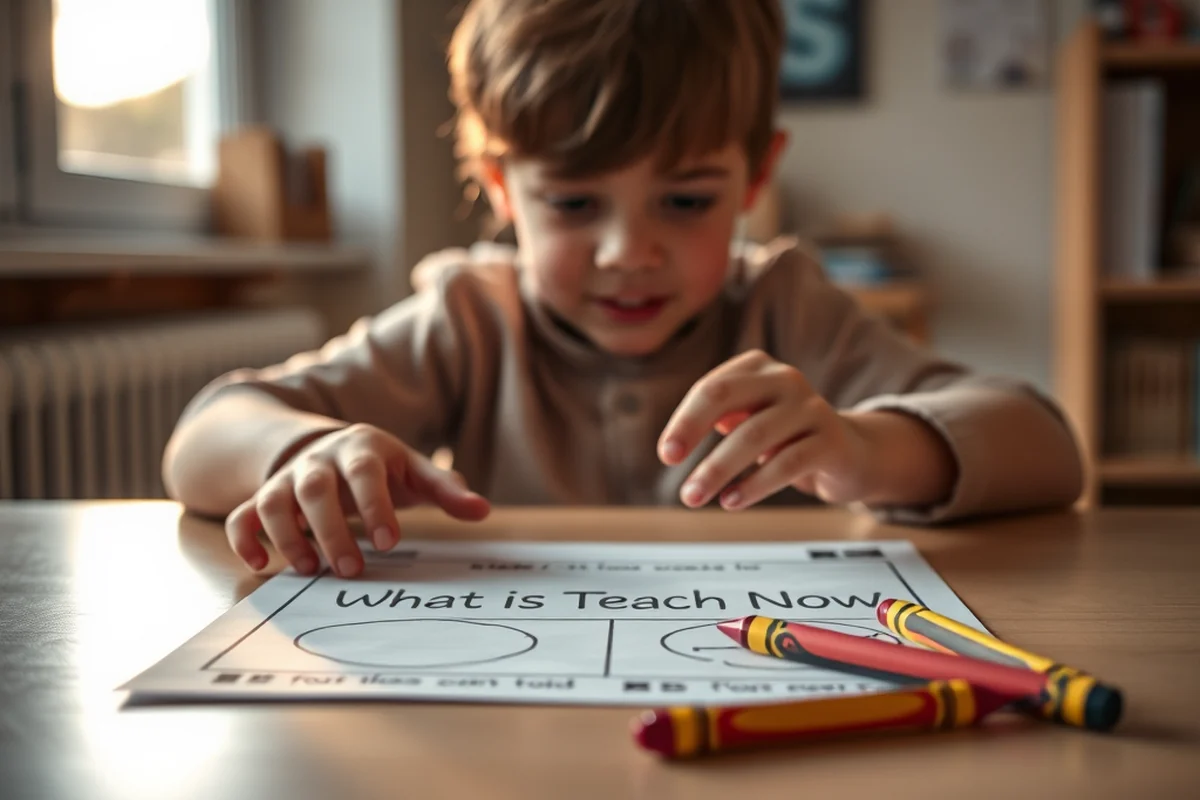
In practice, Teach Now might look like a teacher noticing a child is struggling with a concept and immediately switching the lesson to include a hands-on activity that makes the concept more tangible. It might involve a spontaneous discussion that arises from a student’s question, or a role-play exercise that helps students explore a topic through personal experience.
I once had a class that was supposed to be focused on math, but one student became fascinated with the way light reflected off the window. Instead of moving on, I let the class explore that curiosity, leading to a deep, cross-disciplinary lesson that combined science, art, and even some basic geometry.
This kind of flexibility is what makes Teach Now powerful. It’s not about following a script—it’s about being present and open to the possibilities that emerge in the classroom.
The best lessons are the ones that happen when you’re willing to let go of the plan and follow the students’ curiosity.
Related: Why teach kids coding
Why Teach Now Is Effective for Young Learners
Young children are naturally curious, and their attention spans are short, which is why rigid, lengthy lessons often fail to engage them. Teach Now addresses this by creating learning experiences that are immediate, relevant, and responsive to their interests.
In my classroom, I noticed that when I used Teach Now techniques, students were more engaged and participated more actively. Lessons that had previously been met with disinterest now became moments of excitement and discovery.
For example, during a lesson on emotions, a student suddenly expressed frustration, and instead of dismissing it, I used that moment to teach the class about identifying and managing emotions. The result was a powerful, real-life lesson that resonated with all the students.
When a student expresses an emotion—whether it's frustration, excitement, or confusion—use that as a teachable moment. It’s a chance to explore the feeling and its impact on learning.
“I remember the first time I saw a classroom come alive with energy and curiosity—not from a teacher's lecture, but from a child standing up…”— Teaching Drama to Kids editors
Related: Step by step teaching kids to read
How to Implement Teach Now in the Classroom

To implement Teach Now, educators must first shift their mindset from being a strict planner to being a responsive guide. This means being open to adjusting lesson plans based on what students are showing us. It also means prioritizing student voice and allowing them to shape the direction of learning.
I’ve found that the most effective way to implement Teach Now is to start small. Choose one lesson or activity where you’re willing to let go of the plan and see where the class goes. Afterward, reflect on what worked and what didn’t. This helps build confidence in the approach and makes it easier to scale over time.
The key to successful implementation is practice. Like any teaching method, Teach Now takes time to master. It requires a willingness to be flexible, to listen, and to let go of the need for perfection in lesson planning.
Related: What are things to teach kids
The Benefits of Teach Now for Educators
For educators, Teach Now offers a way to create more dynamic and responsive classrooms. It allows teachers to be more present, to build stronger relationships with students, and to create learning experiences that are meaningful and engaging.
One of the most significant benefits I’ve noticed is the increase in teacher satisfaction. When I used Teach Now techniques, I felt more connected to my students and more in tune with their needs. It reduced the stress that comes with rigid planning and allowed me to focus on the moment.
Also, Teach Now helps teachers develop a deeper understanding of their students’ learning styles and emotional needs. This leads to more personalized teaching and better outcomes for students.
Related: Why do teachers call kids friends
How Teach Now Encourages Student Creativity
When students are given the freedom to explore topics in their own way, they become more creative and engaged in the learning process. Teach Now fosters this by allowing students to shape their own learning paths and take ownership of their education.
In my classroom, I noticed that when students were allowed to contribute their own ideas, they became more invested in the lessons. They started coming up with their own questions, exploring topics that interested them, and even creating their own mini-lessons for the class.
This kind of student-led creativity is what makes learning so powerful. It allows students to express themselves, think critically, and explore topics in a way that feels natural and meaningful.
Creativity thrives in classrooms where students are encouraged to take the lead and explore their own interests.
Related: Can you teach kids on preply
The Long-Term Impact of Teach Now on Student Learning
Students who are exposed to Teach Now techniques are more likely to develop a love of learning. They become curious, engaged, and motivated to explore new topics. This kind of intrinsic motivation is one of the most powerful drivers of long-term learning.
I’ve seen students who were once disengaged and disinterested in school become excited about learning when they were given the freedom to explore topics in their own way. They started asking more questions, participating more in class, and even sharing their own ideas with enthusiasm.
This shift in attitude and engagement is something that stays with students long after the classroom. It lays the foundation for a lifelong love of learning, which is one of the most valuable gifts any teacher can give.
🎭 Younger Kids Version
Tailored for ages 3-5, this version uses simple role-play and sensory activities to engage young learners.
🧠 Older Kids Version
Designed for ages 7-12, this version includes more complex discussions, debates, and creative problem-solving exercises.[1]
📚 No-Prep Version
This variation requires no planning or materials—just your presence and the ability to respond to student needs in the moment.
👥 Group Version
Ideal for collaborative learning, this version encourages group discussions, peer teaching, and shared problem-solving.
🚀 Extension Version
This version includes additional activities and reflection exercises to deepen learning and encourage critical thinking.
| The mistake | Why it happens | The fix |
|---|---|---|
| Trying to implement Teach Now without preparation or flexibility. | Teach Now requires a shift in mindset and the ability to respond to student needs in real time, which can be challenging if you’re rigid in your approach. | Start with small, manageable changes and practice being flexible and responsive in your teaching. |
| Overlooking the emotional needs of students in favor of the lesson plan. | Ignoring emotional needs can lead to disengagement and missed learning opportunities. | Make it a priority to observe and respond to emotional cues, even if it means adjusting the lesson plan on the fly. |
| Not giving students enough autonomy in the learning process. | Teach Now is about student-led learning, and without autonomy, it can become just another traditional lesson. | Encourage students to take ownership of their learning by letting them shape the direction of the lesson. |
| Assuming that all students will respond the same way to Teach Now techniques. | Every student is different, and what works for one may not work for another. | Be open to trying different approaches and adapting them based on what works best for your class. |
What Is Teach Now
Common Questions
How can I start using Teach Now in my classroom?
Do I need any special materials or resources?
Can Teach Now be used in all subject areas?
How does Teach Now support student engagement?
References
- Arizona Alternative Preparation Programs (azed.gov)
- Educator Pathways & Programs | Colorado Department of Higher ... (cdhe.colorado.gov)
- Hollylynne Lee and Gemma Mojica Aim to Transform Teacher ... (ced.ncsu.edu)
- Statistics in Schools - U.S. Census Bureau (census.gov)
Cite this guide
Teaching Drama to Kids (2026). What Is Teach Now. https://dramaplayarea.com/what-is-teach-now/
Feel free to cite or share this guide.