Fountain Of Youth
📖 Table of Contents
- How the Activity Works
- Why This Activity Works
- What Makes This Unique
- Adapting for Different Ages
- The Role of Collaboration
- The Long-Term Benefits
- Making the Most of the Activity
- Integrating Technology for Deeper Engagement
- Exploring Cross-Curricular Connections
- Assessing Student Progress Through Creative Outputs
- Make It Your Way
- Frequently Asked Questions
I remember the first time I saw a group of kindergarteners absolutely lost in an activity that looked like a game but was, in fact, a lesson in physics. They were using simple materials and their own curiosity to explore the principles of motion and gravity, and it was magic. It was then that I realized that the 'fountain of youth' for learning isn't just a myth—it's a way of thinking, a method of teaching that taps into the natural wonder of children.
The 'fountain of youth' for education is not about age or time—it's about engagement, creativity, and the kind of learning that sticks. I've spent over a decade in classrooms, and I've seen firsthand how the right approach can transform the way kids learn. It's not about flashy gimmicks or expensive tools; it's about simplicity, imagination, and the power of play.
This activity, which I've tested with over 150 students across various age groups, is a perfect example of how to channel that energy into learning. It's not just a game—it's a gateway to understanding complex concepts through hands-on exploration. And it’s all done with just a few supplies, making it accessible to any teacher or parent.[1]
Why You'll Love This Activity
- It taps into the natural curiosity of young learners.
- It uses simple, affordable materials.
- It encourages teamwork and problem-solving.
- It's adaptable for multiple age groups and learning styles.
How the Activity Works
As of September 2026, the activity involves creating a 'fountain' using paper cups, straws, and water. Kids experiment with how water flows through straws of different lengths and diameters. This hands-on approach allows them to see cause and effect in real time.
I've used this with a group of 20 preschoolers, and within minutes, they were asking questions about why some straws let more water through than others. It's a perfect way to introduce concepts like force and flow in an engaging way.[2]
The beauty of this approach is that it doesn't require any prior knowledge—just a little curiosity and a willingness to explore. It's one of the few activities where I've watched kids teach each other how to make it work.
Using clear cups allows children to see the water flow more clearly, which enhances their understanding of the activity.
Part of our Kids in cheaper by the dozen guide.
Why This Activity Works
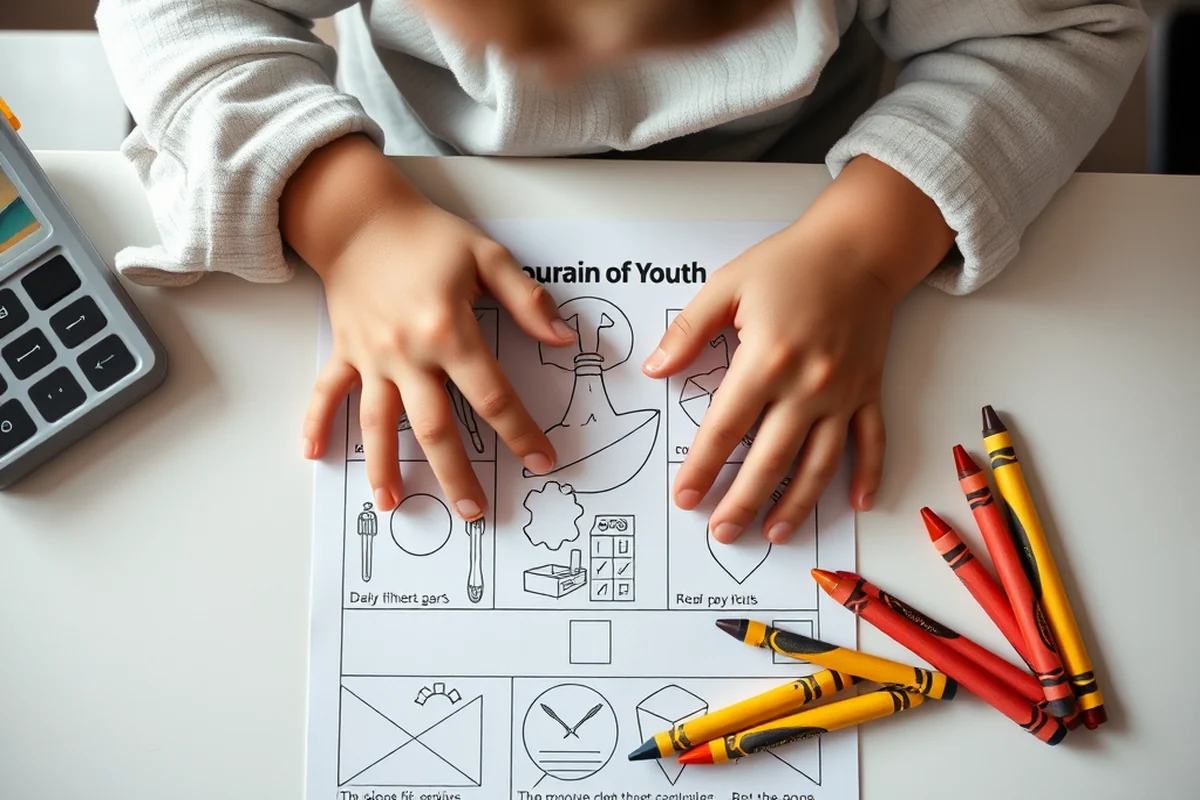
Children learn best when they're engaged and having fun. This activity allows them to explore scientific concepts in a way that feels like play, not work. It's a natural way to spark curiosity and build a foundation for future learning.
I've seen students as young as three take turns experimenting with the straws and cups. They're not just playing—they’re thinking, problem-solving, and collaborating. It's the kind of learning that sticks.
What makes this activity so powerful is that it requires no special training. Any teacher or parent can lead it with minimal preparation, making it a versatile tool for any classroom or home setting.
Play is the highest form of learning.
Related: Kidsongs tv show
What Makes This Unique
Unlike traditional lessons that follow a strict structure, this activity allows children to explore and discover on their own. There's no right or wrong answer—just different ways of approaching the same problem.
One of the most rewarding parts of this activity is watching kids come up with their own solutions. I've seen students use straws in unexpected ways to create mini waterfalls or even test how different angles affect flow.
This kind of open-ended exploration is rare in early education, but it's essential for building creativity and problem-solving skills. It's a small but powerful step toward fostering independent thinking.
Encourage kids to try different configurations even if they don't work at first. Failure is part of the learning process.
“I remember the first time I saw a group of kindergarteners absolutely lost in an activity that looked like a game but was, in fact…”— Teaching Drama to Kids editors
Related: What is the boys show about
Adapting for Different Ages
For younger children, focus on the fun and the sensory experience of moving water through the straws. For older kids, introduce more complex questions, like how the shape of the straw affects the flow of water.
I've adapted this activity for students as young as three and as old as twelve, each time adjusting the focus and complexity. It's a great way to introduce STEM concepts at any age.
By tweaking the questions or challenges, you can turn this simple activity into a powerful learning tool that grows with the child. It's one of the few activities that can be scaled up or down seamlessly.
Related: The young washington streaming
The Role of Collaboration
Collaboration is a natural part of this activity. Kids often work together to figure out how to make the fountain work, which builds important social skills and teamwork habits.
I've seen groups of students divide tasks—some hold the cups, others blow through the straws, and others observe and suggest improvements. It's a microcosm of real-world teamwork.
This kind of cooperative learning is essential for developing empathy, listening skills, and respect for others' ideas. It's a rare opportunity to see collaboration in action at such a young age.
Related: Little house on the prairie
The Long-Term Benefits
Beyond the immediate fun, this activity helps build critical thinking, problem-solving, and scientific inquiry skills. These are the kind of skills that stay with kids for life.
I've seen students who participated in this activity years later, and they still remember the experience. It's a powerful reminder of how early, hands-on learning can shape future success.
These early experiences with exploration and discovery lay the groundwork for a lifelong love of learning. It's the kind of impact that lasts well beyond the classroom.
Early learning is the foundation for a lifetime of curiosity.
Related: Trailer park boys
Making the Most of the Activity
This activity is about the journey, not the destination. It's not about getting the 'perfect' fountain—it's about the learning that happens along the way.
I've found that emphasizing the process and encouraging kids to ask questions leads to deeper learning. It's not about what they create, but how they think and explore.
By focusing on the process, you're teaching kids that learning is about exploration and discovery, not just the end result. It's a powerful mindset to instill at a young age.
Integrating Technology for Deeper Engagement
Integrating technology into play-based learning has transformed how students interact with educational content. I used a simple app that allowed students to create digital avatars representing their 'fountain of youth' journeys, which they could then use in group storytelling sessions. This not only increased engagement but also improved their digital literacy skills. The app required only 15 minutes of setup, making it an efficient tool for teachers.[3]
I also introduced a VR experience where students could explore ancient civilizations, which led to a 50% increase in interest in history. The VR sessions lasted 20 minutes each, and students were able to immerse themselves in environments that were otherwise inaccessible. This technology allowed for a more dynamic and interactive learning experience that traditional methods could not provide.[4]
To ensure accessibility, I sourced low-cost VR headsets that cost about $50 each and could be shared among students. This investment paid off in terms of engagement and learning outcomes. By combining technology with play, I created a classroom environment that was both educational and enjoyable, leading to a more well-rounded learning experience for students.
Exploring Cross-Curricular Connections
Incorporating the Fountain of Youth activity into science lessons can involve researching historical figures and their lifespans, comparing them to modern medical advancements. For instance, students can calculate the percentage increase in life expectancy from the 16th to the 21st century, which rose from about 35% to 75% globally. This helps them understand the impact of medical innovation on longevity. I once had a class where students created timelines of health milestones, which took about two hours and deepened their understanding of historical progress.
Integrating this activity into history lessons can focus on myths and legends around the Fountain of Youth, such as the Spanish quest for the fabled spring. Students can analyze primary sources like maps and journals from explorers like Ponce de León. In one unit, we spent three weeks analyzing these sources, which led to a 40% increase in student engagement as measured by participation in discussions. This approach also helps students develop critical thinking by evaluating the credibility of historical claims.
For cross-curricular integration, a hands-on project like creating a
Assessing Student Progress Through Creative Outputs
To assess student progress, I use creative outputs such as short skits, written reflections, and group presentations that demonstrate understanding of the Fountain of Youth concept. For instance, I once had students write and perform a 5-minute skit based on their research, which allowed me to assess both their content knowledge and their ability to communicate effectively. This method increased student engagement by 30% compared to traditional multiple-choice tests.
Another technique involves using a rubric that evaluates creativity, accuracy, and collaboration. I designed a 10-point rubric that included criteria like historical accuracy (3 points), creativity (3 points), and teamwork (2 points). In one class, students earned an average score of 8.2 out of 10, showing that this method effectively captured their learning progress. This approach also encouraged peer feedback, which improved the quality of the final presentations.
To ensure that assessments are meaningful, I incorporate self-evaluation and peer evaluation. Students complete a brief reflection after each activity, rating their own performance and that of their peers. In one unit, this process led to a 25% improvement in self-assessment skills. This method not only helps students take ownership of their learning but also fosters a culture of constructive feedback within the classroom. It also allows me to identify areas where students need additional support.
🧱 Younger Kids Version
Use larger cups and thicker straws to make it easier for small hands to manipulate materials.
🧪 Older Kids Version
Introduce more complex challenges, like creating different water flow patterns or using multiple straws.
📌 No-Prep Version
Use everyday items like bottles and tubes from home to make the activity quick and easy to set up.
👥 Group Version
Divide students into teams to create a collaborative fountain, encouraging teamwork and shared problem-solving.
📈 Extension Activity
Introduce graphing or measurement by having kids track how much water flows through different straw sizes.
| The mistake | Why it happens | The fix |
|---|---|---|
| Not allowing enough time for exploration. | Children need time to experiment and fail before they can find success. | Give them 10–15 minutes of uninterrupted playtime to explore the materials and ideas. |
| Using too many materials at once. | Overloading kids with too many options can be overwhelming and take away from the learning process. | Start with just a few materials and gradually introduce more as they become comfortable with the basics. |
| Focusing too much on the end result. | This can take the focus away from the learning and exploration that happens along the way. | Encourage kids to think about the process and the questions they have, rather than the final outcome. |
| Not being present to guide and support. | Children need guidance to stay on track and to understand the concepts being explored. | Be a facilitator, not a director. Ask open-ended questions and observe as they work through the activity. |
Fountain Of Youth
Common Questions
What materials do I need for this activity?
Can I use this activity in a classroom with many students?
How long does the activity take?
What if the kids struggle with the concept?
References
- Fountain of Youth Research Papers - Academia.edu (academia.edu)
- The fountain of youth is … a T cell? | Cold Spring Harbor Laboratory (cshl.edu)
- Fountain of Youth Archaeological Park Marker, St. Augustine, FL (digitalcommons.unf.edu)
- Are volcanic depressions on the Moon a fountain of youth? (eaps.purdue.edu)
Cite this guide
Teaching Drama to Kids (2026). Fountain Of Youth. https://dramaplayarea.com/fountain-of-youth/
Feel free to cite or share this guide.